JOLTS Job Openings Report: What to Watch, July 2026
Comes out: Tuesday, September 1, 2026 at 10:00 a.m. ET
Published by: U.S. Bureau of Labor Statistics
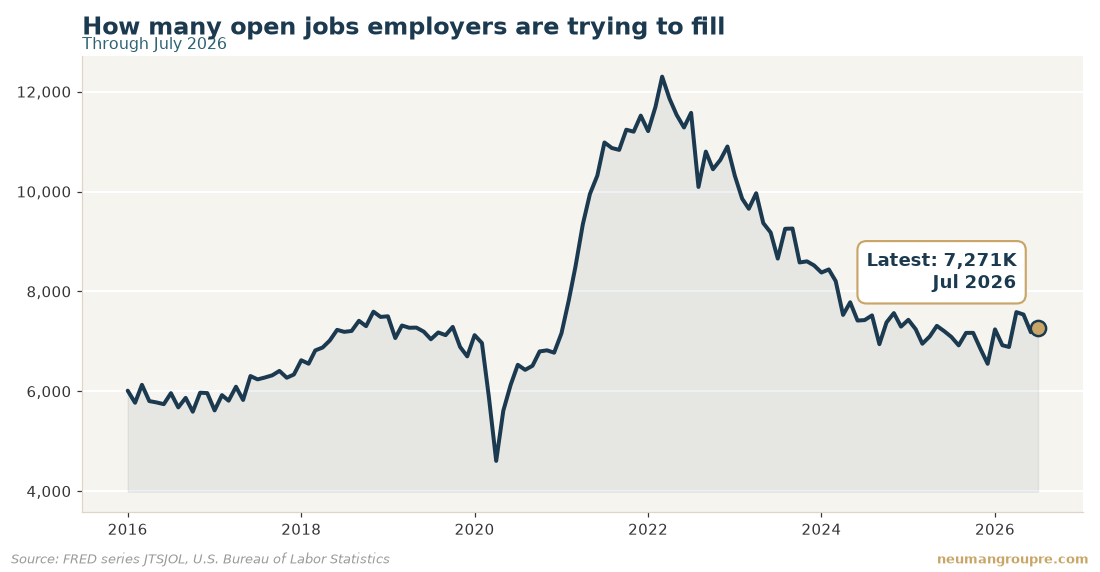
Open jobs climbed to 7.271 million in July
The number of open jobs in the United States rose to 7.271 million in July 2026. An open job is a spot an employer is trying to fill. This count is called Job Openings: Total Nonfarm, and it comes from the U.S. Bureau of Labor Statistics, the government office that tracks work and pay.
That is up from 7.182 million the month before. It is also up from 7.089 million a year ago. So more jobs are open now than last month, and more than this time last year.
Why does this matter for a home? Open jobs are a sign of future paychecks. When there are lots of openings, people feel safer about their income. That makes it easier to sign a mortgage, which is the long-term loan you use to buy a home, or to sign a lease, which is the rental agreement you sign to rent one.
If you are a buyer in Miami-Dade, Broward or Palm Beach, a strong job market can give you the confidence to make an offer. If you are a seller or a landlord, more people feeling steady about work can mean more people ready to buy or rent your place.
Numbers move, so it helps to talk with someone who watches them. Call The Neuman Group at 954-228-5001 and we can walk through what this means for your plans.
A new jobs report is coming out on Tuesday, September 1, 2026, at 10:00 a.m. Eastern time. It is called JOLTS, which stands for the Job Openings and Labor Turnover report. It counts how many open jobs employers across the country are trying to fill.
You might think a jobs report has nothing to do with your house or your rent. It does. Open jobs are a promise of future paychecks. When there are lots of open jobs, people feel safe signing a mortgage or a lease.
This page explains what the report measures, what the numbers look like right now, and what each possible result could mean for you here in South Florida.
What this report actually measures
JOLTS is put out by the U.S. Bureau of Labor Statistics, a government office that counts jobs. The main number is simple. It is the count of open jobs that companies are trying to fill on the last business day of the month.
Think of it as a help-wanted count for the whole country. A lot of open jobs means employers are hungry for workers. Few open jobs means they have slowed down their hiring.
This matters for housing because a job is a paycheck. People buy homes and sign leases when they feel their income is safe. When open jobs dry up, people get nervous and wait.
What the charts show right now
The chart above shows the number of open jobs across the country. The most recent figure is 7,359K open jobs for June 2026. K means thousand, so that is about 7.4 million open jobs.
That number is down from 7,537K the month before. So hiring cooled a little. But it is still up from 7,204K a year ago. So compared with last year, there are more open jobs, not fewer.
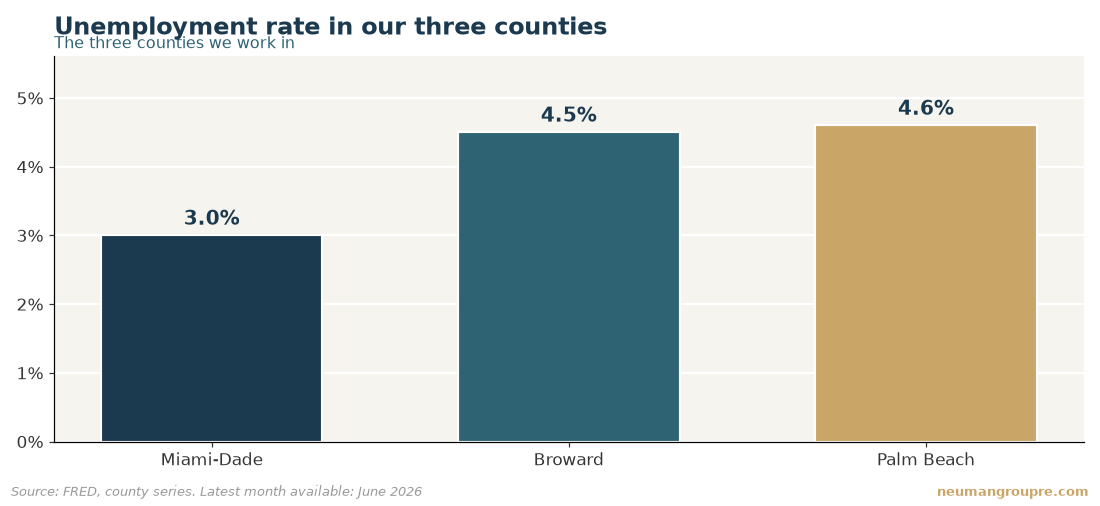
Closer to home, the chart also shows the unemployment rate in our three counties for June 2026. The unemployment rate is the share of people who want a job but do not have one yet. Miami-Dade is at 3.0%, up from 2.6% a year ago. Broward is at 4.5%, up from 3.7% a year ago. Palm Beach is at 4.6%, up from 3.9% a year ago. All three are higher than they were a year ago.
What it means for your mortgage payment
The jobs report does not set mortgage rates. But it points the way. When open jobs fall fast, lenders often expect the economy to slow. That can pull mortgage rates down. When open jobs stay strong, rates tend to hold steady or drift up.
Rates move your monthly payment. On a $600,000 loan, even a small drop in your rate lowers what you pay each month. A small rise does the opposite. So the direction of this report can quietly shape what you can afford.
What it means for home prices
Jobs and home prices are linked. When lots of people have steady paychecks, more of them shop for homes, and prices hold firm. When open jobs shrink and worry grows, fewer buyers show up. That gives buyers more room to negotiate.
South Florida has its own pull. People move here from other states and countries. So our market does not always follow the national trend step for step. But a strong national job market still helps keep local demand up.
What it means for rent
Rent follows jobs too. When people feel secure in their income, they are willing to sign a new lease or pay a bit more. When open jobs fall and the local unemployment rate climbs, some renters double up or stay put, and that can cool rent growth.
If you own a place and rent it out, watch these numbers. They hint at how easy it will be to fill a unit and how much rent the market will bear.
The bottom line
You do not need to guess tomorrow's number. Just watch the direction. Whether open jobs rise or fall tells you which way the wind is blowing for rates, prices, and rent.
Three things to watch
Unemployment rate in our three counties
| County | Now | A year ago | Direction |
|---|---|---|---|
| Miami-Dade | 3.0% | 2.6% | up |
| Broward | 4.5% | 3.7% | up |
| Palm Beach | 4.6% | 3.9% | up |
County figures from FRED, latest month published: June 2026.
Questions people ask
What is the JOLTS report?
JOLTS stands for Job Openings and Labor Turnover. It is a monthly report from the U.S. government that counts how many open jobs employers are trying to fill. It also tracks how many people were hired or left their jobs.
When does the next report come out?
It comes out on Tuesday, September 1, 2026, at 10:00 a.m. Eastern time. It is released by the U.S. Bureau of Labor Statistics.
How many job openings are there right now?
The most recent figure is 7,359K, which is about 7.4 million open jobs, for June 2026. That is down from 7,537K the month before but up from 7,204K a year ago.
Why does a jobs report affect my mortgage?
The report does not set mortgage rates directly. But it shapes what lenders expect for the economy. A big drop in open jobs can pull rates down, while a strong report can keep them steady or push them up.
What is happening with jobs in South Florida?
For June 2026, the unemployment rate was 3.0% in Miami-Dade, 4.5% in Broward, and 4.6% in Palm Beach. All three are higher than they were a year ago, which means slightly more people are looking for work.
Every figure on this page comes straight from FRED (Federal Reserve Economic Data, Federal Reserve Bank of St. Louis) — series JTSJOL. We publish these before the report lands so you can read the background while it is still quiet, then we add the actual number here the moment it is out.
Call 954-228-5001 or ask us for a free read on your property.