Jobless Claims August 2026: What Thursday's Report Means
Comes out: Thursday, August 27, 2026 at 8:30 a.m. ET
Published by: U.S. Department of Labor
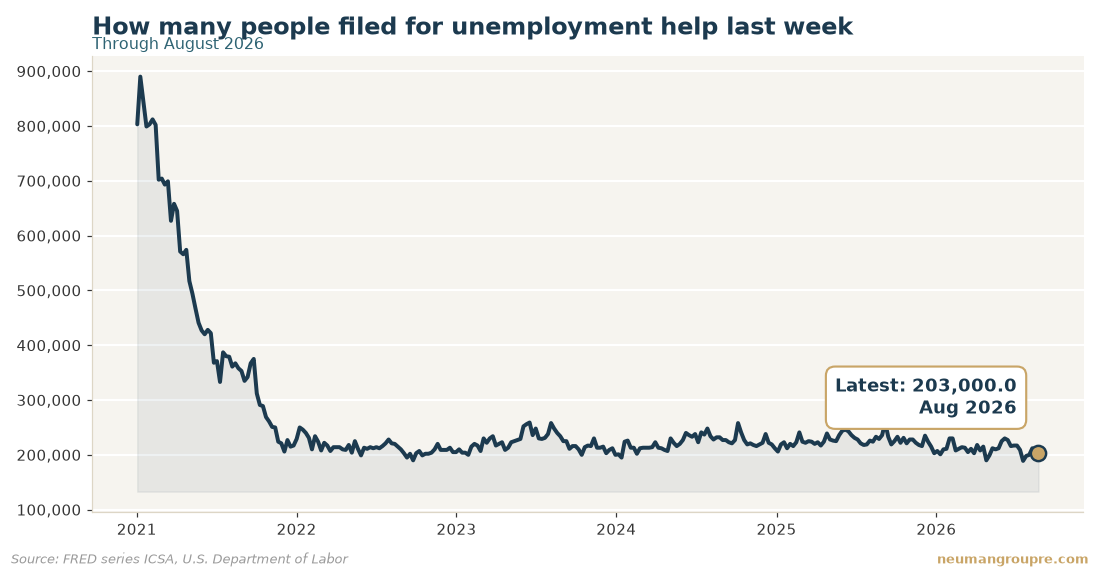
203,000 filed for new jobless help last week
203,000 people filed for new unemployment help last week. This number counts how many people just lost a job and asked the government for help paying their bills. It is the fastest look we get at whether layoffs are picking up.
That is down from 207,000 the week before. It is also down from 225,000 at this time a year ago. Down means fewer people are filing, so layoffs are staying low.
Why does this matter for a home? When people feel safe in their jobs, they are more willing to buy, sell, or sign a lease. Steady job numbers keep buyers in the market and keep demand for South Florida homes moving.
If you are a buyer, low layoffs mean the pool of other buyers is not shrinking, so you may still face competition. If you are a seller or an owner, it means there are still people out there able to buy or rent. If you are a renter, steady jobs help keep demand for rentals firm.
One weekly number does not decide anything on its own. But when this figure stays low week after week, it is a sign the ground under the housing market is steady. Questions about your own move? Call The Neuman Group at 954-228-5001.
A new jobs report comes out on Thursday, August 27, 2026 at 8:30 a.m. Eastern time. It is called the Unemployment Insurance Weekly Claims report. It comes from the U.S. Department of Labor.
This report counts how many people filed for unemployment help last week. Filing means asking the government for money after losing a job. It is one of the fastest ways to see if people are losing work.
Why should you care? Jobs and housing are linked. When more people lose work, fewer people buy or rent homes. When jobs stay steady, the housing market keeps moving. If you are buying, selling, renting out a place, or paying a mortgage in South Florida, this number matters to you.
What this report actually measures
The report has one main number, called Initial Claims. This is how many people filed for unemployment help for the first time last week. Think of it as a weekly count of fresh job losses.
A lower number means fewer people are filing. That points to a steady job market. A higher number means more people are filing. That can be an early sign that the job market is cooling off.
This is not a guess about the future. It is a real count from last week. That is why people watch it so closely. It arrives fast, every single week.
What the charts show right now
The chart above shows the latest count of Initial Claims at 206,000 for August 2026. The week before, the number was 212,000. A year ago, it was also 212,000.
So the newest reading is down from both last week and last year. Down means fewer people filed for help. For now, that points to a job market that is holding steady, not falling apart. Thursday's report will add the next week to this picture.
What it means for your mortgage payment
Jobless claims do not set mortgage rates by themselves. But they feed the bigger picture. When many people start losing jobs, lenders and markets expect the economy to slow. That can pull mortgage rates down over time. When jobs stay steady, rates have less reason to fall.
Here is why the rate matters. Say you take out a $600,000 home loan. The interest rate decides your monthly payment. When the rate goes up, your payment goes up. When the rate goes down, your payment goes down. Even a small move in the rate changes what you pay every month for years. So a run of weak job reports could, over time, ease rates a little. A run of strong reports could keep them where they are.
What it means for home prices
Home prices lean on demand. Demand means how many people are ready and able to buy. When jobs feel safe, more people shop for homes. That keeps prices firm. When layoffs rise, some buyers wait. Fewer buyers can soften prices.
One weekly number will not swing prices on its own. But a steady climb in claims, week after week, is the kind of trend that cools buyer demand in Miami-Dade, Broward, and Palm Beach.
What it means for rent in South Florida
Rent follows jobs too. When people have steady paychecks, they can pay rent and even move up to nicer places. That supports rent prices. If layoffs rise, some renters double up or move to cheaper spots. That can slow rent growth.
If you rent out a property, watch the trend, not one week. A steady job market makes it easier to keep your place filled and your rent on time. A rising trend in claims is a signal to plan for a slower market.
The bottom line
One weekly report is a snapshot. The direction over many weeks tells the real story. Watch whether claims keep drifting down, hold flat, or start climbing. That trend shapes rates, prices, and rent more than any single week.
Three things to watch
Questions people ask
What are jobless claims?
Jobless claims count how many people filed for unemployment help. Filing means asking the government for money after losing a job. The report comes out every week, so it is one of the fastest reads on the job market.
When does the report come out?
It comes out on Thursday, August 27, 2026 at 8:30 a.m. Eastern time. It is published by the U.S. Department of Labor. A fresh count arrives every week.
What is the latest number?
The most recent count of Initial Claims is 206,000 for August 2026. That is down from 212,000 the week before and down from 212,000 a year ago. Lower means fewer people filed for help.
How do jobless claims affect mortgage rates?
They do not set rates directly. But when many people lose jobs, markets expect a slower economy, which can pull rates down over time. When jobs stay steady, rates have less reason to fall. On a $600,000 loan, even a small rate change moves your monthly payment.
Should I make a housing decision based on one week?
No. One week is just a snapshot. The direction over many weeks tells the real story. Watch whether claims keep drifting down, hold flat, or climb before you read too much into it.
Every figure on this page comes straight from FRED (Federal Reserve Economic Data, Federal Reserve Bank of St. Louis) — series ICSA. We publish these before the report lands so you can read the background while it is still quiet, then we add the actual number here the moment it is out.
Call 954-228-5001 or ask us for a free read on your property.