PCE Inflation Report: What to Watch August 26
Comes out: Wednesday, August 26, 2026 at 8:30 a.m. ET
Published by: U.S. Bureau of Economic Analysis
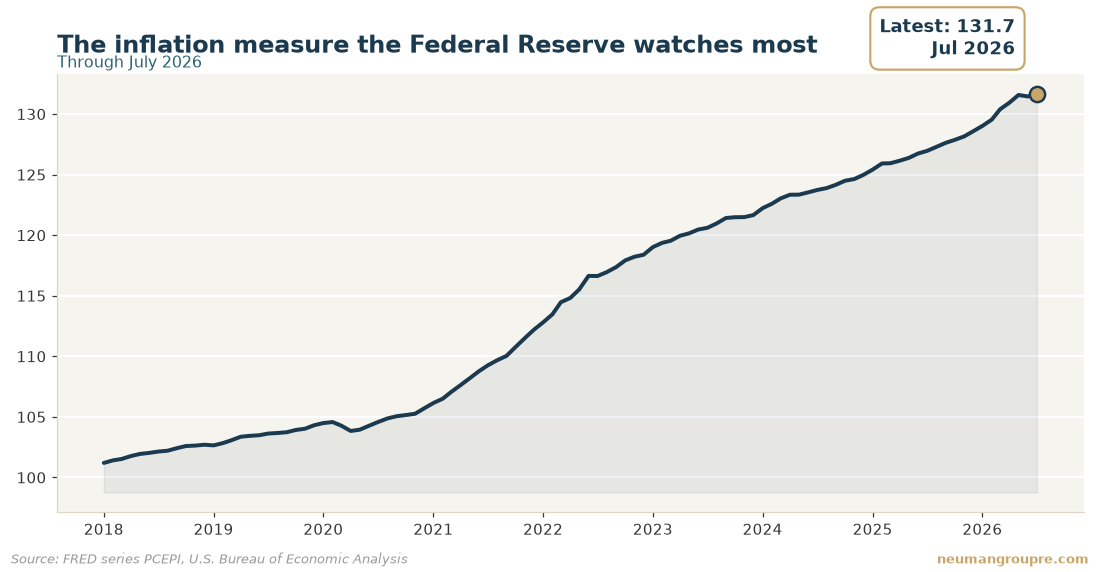
131.7: the inflation gauge the Fed watches barely moved in July
The number is 131.7 for July 2026. This is the price index that tracks what people actually pay for things. The Federal Reserve, the group that sets the country's interest rate policy, watches this number more than any other to judge inflation.
Last month it was 131.5. So it is about the same as last time. A year ago it was 127.0, so prices are up over the past year.
Here is why this matters for your house or your rent. When this number stays calm, the people who set interest rates feel less pressure to keep rates high. When it jumps, they often keep rates high longer. Mortgage rates tend to follow that mood.
A steady number like this one is a small piece of good news if you are shopping for a home loan. On a big loan, like $600,000, even a small move in the rate changes what you pay every month. A calmer inflation number makes a sudden jump in rates less likely in the short run.
If you are a buyer, seller, owner thinking about refinancing, or a renter, this report is one of the main things that pushes rates up or down. This month it did not push hard in either direction.
A big inflation report lands on Wednesday, August 26, 2026 at 8:30 a.m. Eastern time. It is called Personal Income and Outlays, and inside it is the price number the Federal Reserve watches more than any other.
Inflation just means prices going up, so your money buys less than it used to. This report measures that across the things people buy every day.
Why should you care if you rent, own, or want to buy a home in South Florida? Because this number moves interest rates, and interest rates move your mortgage payment. Here is what to watch for before the number comes out.
What this report actually measures
This report tracks the prices people pay for stuff. It covers things you buy every day, like food, gas, rent, and doctor visits. When those prices go up, that is inflation. Inflation just means your money buys less than it did before.
The full name is the Personal Consumption Expenditures price index. Most people call it PCE. The word index means it turns all those prices into one single number. A higher number means prices are higher overall.
Here is why this one matters. The Federal Reserve, which is the part of the government that sets a key interest rate for the whole country, watches this number more than any other. People often call it the Fed. When this number runs hot, the Fed tends to keep rates high. When it cools off, the Fed has more room to bring rates down.
What the chart above shows right now
The chart above shows the PCE price index over time. The latest reading is 131.4 for June 2026. The month before that it was 131.5. So the number barely moved. That is close to flat from one month to the next.
Now look further back. One year ago the number was 126.7. So over the past year, prices went up. That is the trend the Fed is trying to slow down. The report coming out on Wednesday will add the next dot to that chart.
What it means for your mortgage payment
You might wonder what prices at the store have to do with your home loan. Here is the link. Mortgage rates follow what investors expect the Fed to do. When inflation stays high, investors expect the Fed to keep rates up, and mortgage rates tend to stay up too. When inflation cools, rates often ease.
This matters a lot on a big loan. On a $600,000 mortgage, even a small move in the rate changes your monthly payment. Over 30 years, that adds up to real money. So a soft inflation number can be good news for anyone shopping for a loan, and a hot one can push payments higher.
What it means for home prices
Rates and prices are tied together. When rates drop, buying a home costs less each month, so more buyers can jump in. More buyers usually means more competition for homes. When rates climb, some buyers step back, and sellers may have to wait longer or trim the asking price.
This report does not set home prices by itself. But it nudges the rates that shape how many buyers are out there. That is why real estate people watch it.
What it means for rent in South Florida
If you own a place and rent it out, this number touches you too. When rates are high, fewer renters can buy their first home, so more of them keep renting. That can keep demand for rentals strong. When rates fall, some renters become buyers, which can loosen up the rental market.
For a renter, the same math works in reverse. Lower rates may open a door to buying. Higher rates may mean renting a while longer. Either way, this Wednesday number is one clue about which way the wind is blowing here in Miami-Dade, Broward, and Palm Beach.
Three things to watch
Questions people ask
What is PCE inflation?
PCE stands for Personal Consumption Expenditures. It is a single number that tracks the prices people pay for everyday things. When it rises, that is inflation, which means your money buys less.
Why does the Federal Reserve care about this number?
Of all the inflation measures, the Fed says this is the one it uses most. It helps the Fed decide whether to raise, hold, or lower its key interest rate.
What is core PCE?
Core PCE is the same price measure but with food and gas prices taken out. Those two jump around a lot, so leaving them out gives a steadier view of the trend.
When does the report come out?
It comes out Wednesday, August 26, 2026 at 8:30 a.m. Eastern time. It is released by the U.S. Bureau of Economic Analysis.
How does this affect buying a home in South Florida?
The report moves what investors expect from the Fed, and that moves mortgage rates. Lower rates make monthly payments cheaper and bring out more buyers. Higher rates do the opposite.
Every figure on this page comes straight from FRED (Federal Reserve Economic Data, Federal Reserve Bank of St. Louis) — series PCEPI. We publish these before the report lands so you can read the background while it is still quiet, then we add the actual number here the moment it is out.
Call 954-228-5001 or ask us for a free read on your property.